- The Digital Bridge with Lawrence Eta
- Posts
- When AI Meets Social Fintech: The Rise of Autonomous Economic Networks
When AI Meets Social Fintech: The Rise of Autonomous Economic Networks
Why the next financial system won’t just move money; it will think, adapt, and participate.

Lawrence Eta
March 23, 2026

In partnership with


For years, fintech has focused on one primary function: moving money faster.
Artificial intelligence, on the other hand, has been positioned as a tool for optimisation, improving fraud detection, personalising recommendations, and automating customer service.
Individually, both have transformed the financial landscape.
But together, they are beginning to create something far more consequential.
We are entering a phase where financial systems are no longer just transactional or even digital; they are becoming intelligent, adaptive, and socially embedded.
Money is no longer just moving between accounts.
It is being coordinated across networks, influenced by behaviour, shaped by relationships, and increasingly managed by intelligent systems operating in real time.
This convergence between AI and Social Fintech is not an incremental shift.
It is the foundation of a new financial architecture.
This Week’s Edition Covers
In this week’s edition, we explore how artificial intelligence is accelerating the evolution of Social Fintech into fully networked, intelligent financial systems:
• AI as Financial Infrastructure – How fintech platforms are embedding AI into payments, fraud detection, and customer interaction layers, turning intelligence into a core system capability (TechCentral Africa, 18 March 2026).
• Autonomous Payments & Agent Economies – The rise of AI systems that can initiate, manage, and optimise financial transactions without constant human input (Financial IT, 19 March 2026).
• Social Platforms Becoming Economic Engines – How platforms are integrating payments, commerce, and AI-driven interactions into unified ecosystems (Gulf Business, 20 March 2026).
• Trust in the Age of AI Finance – Why transparency, explainability, and governance are becoming critical as AI begins to influence financial decision-making (BusinessDay Africa, 21 March 2026).
• Emerging Markets as Innovation Hubs – How Africa and other regions are leveraging AI + fintech to build adaptive, inclusive financial systems (ITWeb, 17 March 2026).
Together, these developments point toward a new reality:
Financial systems are no longer just digital.
They are becoming intelligent, networked, and participatory.
Leadership Can’t Be Automated

AI can help you move faster, but real leadership still requires human judgment.
The free resource 5 Traits AI Can’t Replace explains the traits leaders must protect in an AI-driven world and why BELAY Executive Assistants are built to support them.
AI IS CHANGING HOW MONEY WORKS
AI Is Becoming Financial Infrastructure
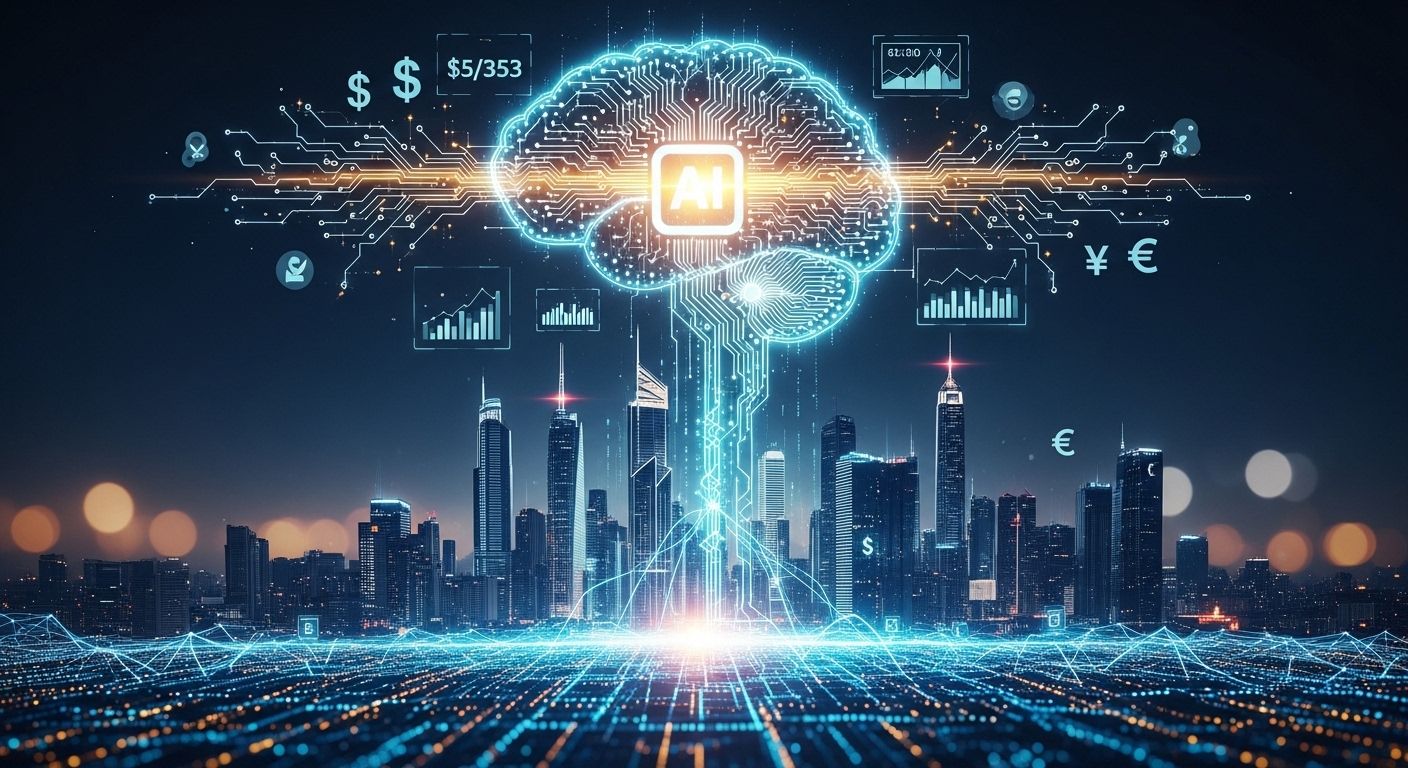
Artificial intelligence is no longer a layer on top of financial systems, it is becoming embedded within the infrastructure itself.
In its early applications, AI in fintech was largely assistive. It helped detect fraud, automate customer support, and generate insights from transaction data. These use cases improved efficiency but did not fundamentally change how financial systems operated.
What is emerging now is a deeper integration.
AI is moving into the core operational layers of financial systems, influencing how payments are processed, how risk is assessed, how users interact with platforms, and how decisions are made in real time.
This shift transforms AI from a tool into an active participant in financial ecosystems.
Recent developments across fintech ecosystems show increasing investment in AI-native infrastructure. Financial platforms are deploying machine learning systems that continuously monitor transaction patterns, adapt to user behaviour, and optimise financial flows without requiring manual intervention (TechCentral Africa, 18 March 2026).
These systems are not simply reacting to financial activity.
They are beginning to shape it.
When intelligence becomes embedded into infrastructure, financial systems evolve from static pipelines into adaptive environments.
This is a critical step toward Social Fintech because networks require systems that can respond dynamically to the behaviour of participants.
AI makes that possible.
SMART MONEY SYSTEMS
The Rise of Autonomous Financial Systems

AI is enabling the emergence of financial systems that can operate with increasing levels of autonomy.
Traditional financial interactions require human initiation. A user decides to send money, approve a transaction, or manage a financial task.
Autonomous systems change this dynamic.
AI agents can monitor conditions, anticipate needs, and execute financial actions based on predefined rules, behavioural patterns, or real-time data inputs.
This creates a shift from manual finance to managed finance.
Industry developments are already pointing in this direction. AI-driven payment systems are being designed to automate recurring transactions, optimise payment routing, and even manage financial decision-making processes within platforms (Financial IT, 19 March 2026).
In these environments, financial actions are no longer discrete events.
They become part of continuous system processes.
This evolution introduces a new layer to Social Fintech.
Networks are no longer just connecting people.
They are being supported by intelligent systems that coordinate economic activity in the background.
The result is a financial system that behaves less like infrastructure, and more like an ecosystem.
Speak your prompts. Get better outputs.

The best AI outputs come from detailed prompts. But typing long, context-rich prompts is slow - so most people don't bother.
Wispr Flow turns your voice into clean, ready-to-paste text. Speak naturally into ChatGPT, Claude, Cursor, or any AI tool and get polished output without editing. Describe edge cases, explain context, walk through your thinking - all at the speed you talk.
Millions of people use Flow to give AI tools 10x more context in half the time. 89% of messages sent with zero edits.
Works system-wide on Mac, Windows, iPhone, and now Android (free and unlimited on Android during launch).
SOCIAL PLATFORMS EVOLVE
Social Platforms Are Becoming Intelligent Economies

The convergence of AI, social platforms, and financial services is transforming digital ecosystems into fully functional economic environments.
Social platforms have already established themselves as spaces for communication and community formation. The addition of commerce introduced economic activity. The integration of payments enabled transactions.
AI now completes the system by adding intelligence.
It allows platforms to personalise experiences, optimise interactions, and facilitate financial activity at scale.
Across global markets, platforms are increasingly integrating AI-driven financial services into their ecosystems, from intelligent payment systems to personalised commerce experiences (Gulf Business, 20 March 2026).
These developments signal a shift from platforms being tools for interaction to becoming engines of economic coordination.
Once platforms reach this stage, they begin to resemble digital economies rather than applications.
Users are no longer just participants.
They are contributors to a network where communication, commerce, and capital are continuously interacting.
This is the operational reality of Social Fintech.
FINANCE FUNS ON TRUSTED AI
Trust Becomes the Critical Layer in AI-Driven Finance

As AI takes on a greater role in financial systems, trust becomes the most critical factor determining adoption and sustainability.
Financial systems have always depended on trust, trust in institutions, trust in processes, and trust in outcomes.
AI introduces new challenges to this dynamic.
When decisions are made by algorithms, users must trust systems they cannot fully see or understand. Questions of transparency, bias, accountability, and governance become central to how these systems are perceived.
Recent discussions across financial and policy sectors highlight the growing importance of explainability and governance in AI-driven finance. Institutions are under increasing pressure to ensure that AI systems are transparent, auditable, and aligned with regulatory frameworks (BusinessDay Africa, 21 March 2026).
Without this, adoption slows.
In Social Fintech, where financial activity is embedded within networks, trust operates at multiple levels:
Trust in the platform
Trust in the network
Trust in the system intelligence
If any of these layers fail, the entire system becomes unstable.
This makes trust not just a feature, but core infrastructure.
FINANCE THAT EVOLVES WITH MARKETS
Emerging Markets Are Building Adaptive Financial Systems

Emerging markets are uniquely positioned to lead the convergence of AI and Social Fintech.
In regions where traditional financial infrastructure is limited or evolving, digital systems are often built with greater flexibility. This allows for the integration of new technologies without the constraints of legacy systems.
AI enables these systems to adapt quickly to user behaviour, local economic conditions, and network dynamics.
Across Africa and other emerging regions, fintech ecosystems are leveraging AI to improve financial inclusion, optimise payment systems, and create more responsive financial services tailored to local needs (ITWeb, 17 March 2026).
These systems are being designed not just for access, but for adaptability.
This positions emerging markets at the forefront of Social Fintech innovation.
Rather than replicating existing financial models, they are building systems that reflect how economic activity actually occurs within their societies.
The result is a new generation of financial infrastructure that is intelligent, inclusive, and network-driven.
The Future of Finance Is Autonomous and Social
The convergence of AI and Social Fintech represents more than technological progress.
It represents a fundamental shift in how financial systems operate.
We are moving from:
• Transactions → Interactions
• Systems → Ecosystems
• Tools → Intelligence
The financial platforms of the future will not simply process money.
They will understand behaviour, coordinate networks, and adapt in real time.
The question is no longer whether this shift will happen.
It is already underway.
The real question is:
Who will design the systems that define how intelligence, networks, and money interact?
Because in that answer lies the future of finance.
Don’t miss out on future updates, follow me on social media for the latest news, behind-the-scenes content, and more:
Threads: Click here
Facebook: Click here
Instagram: Click here
LinkedIn: Click here
Enjoyed this newsletter? Share it with friends and help us spread the word!
Until next time, happy reading!
JOIN THE COMMUNITY
The Bridging Worlds Book
Discover Bridging Worlds, a thought-provoking book on technology, leadership, and public service. Explore Lawrence’s insights on how technology is reshaping the landscape and the core principles of effective leadership in the digital age.
Order your copy today and explore the future of leadership and technology.
SHARE YOUR THOUGHTS
We value your feedback!
Your thoughts and opinions help us improve our newsletter. Please take a moment to let us know what you think.
How would you rate this newsletter? |
Reply