- The Digital Bridge with Lawrence Eta
- Posts
- The Macro Shift: How AI Is Rewiring Value Creation in 2026
The Macro Shift: How AI Is Rewiring Value Creation in 2026
Tech News, Global Digital Transformation, Thought Leadership and Current Trends

Lawrence Eta
January 12, 2026


.
Artificial intelligence has officially exited the hype cycle and entered the economic bloodstream. It is now shaping how nations build competitiveness, how industries organize themselves, how work is composed, and how value is created. This is not automation as a one-time efficiency gain. This is structural transformation.
It no longer sits on the edges of productivity conversations but inside the core of how countries compete, how industries operate, and how societies work.
To understand where the world is heading, we must look beyond the tools and ask a deeper question:
What happens to productivity, policy, infrastructure, talent, and national strategy when AI becomes the engine of value creation?
As we enter 2026, it is clear that AI is not merely automating tasks. It is restructuring labour, reorganizing industries, and reshaping GDP composition.
This week’s edition covers:
Global AI market acceleration and economic restructuring
GDP forecasts and macroeconomic resilience in early 2026
Emerging market AI growth corridors across Africa and Asia
Infrastructure, compute and energy bottlenecks
Governance, risk and the human dimension of economic rewiring
AUTOMATION VS ECONOMIC FORCE
Beyond Automation: AI as a Structural Economic Force

Reports published by Tech News Armenia on 9 January 2026 and the United Nations Department of Economic and Social Affairs on 11 January 2026 highlight an important shift in the global discourse. AI is being framed not as a wave of automation but as a general purpose technology that reshapes industries, work, and national economic strategy.
Automation reduces costs and increases speed, but that is only the first layer. The deeper transformation comes through recomposition of work. In this model, AI does not just take over tasks. It restructures how work is divided, which parts require human judgment, and which become abundant due to computational capability. Cognitive workloads once limited by time, labor and cost become scalable through models that summarize, predict, and simulate. This alters hiring profiles, workflow design, service delivery and even the educational prerequisites for competitive labor markets.
Analysts referenced by Tech News Armenia on 9 January forecast the global AI market to surpass two trillion dollars in spending during 2026, driven primarily by enterprise and public sector platforms rather than consumer novelty applications. The United Nations Global Outlook released on 11 January noted that AI is already producing measurable shifts in service delivery, logistics, financial analysis and urban planning. These changes are not incidental. They influence trade, productivity and institutional performance at scale.
The consequence of this shift is that productivity gains are not the end goal. They are merely the entry point. The real impact will be in how societies reorganize work. As high volume cognitive tasks become abundant, human value shifts toward judgment, relationship building, creativity and complex system design. Leaders who continue to view AI through a narrow automation lens risk missing the broader restructuring of value creation. The strategic question for policymakers and executives is no longer how to automate. It is how to design hybrid systems where humans and AI complement each other to improve outcomes.
SIGNALS AND RESILIENCE
Growth Signals and Economic Resilience

Image Source: The George Washington University
The United Nations Global Outlook released on 11 January 2026 projects that global GDP will grow by approximately two point seven percent in 2026 despite economic headwinds. Anadolu Agency on 7 January 2026 highlighted that digital transformation, infrastructure spending and AI modernization are stabilizing forces rather than speculative impulses.
Economic resilience in the AI era is less dependent on traditional industrial output and more dependent on digital capacity building. This includes data infrastructure, compute access, digitally skilled labor and AI augmented services. When these capabilities are present, economies become more adaptive, enabling faster recovery and more flexible responses to external shocks such as supply chain disruptions or demographic shifts.
Reports from the UN and economic analyses from Anadolu Agency attribute resilience trends in multiple emerging markets to digital modernization efforts including public sector digitization, financial technology infrastructure and energy grid upgrades. These have a multiplier effect on economic systems because they enable faster transactions, more efficient services, and higher institutional performance.
Despite these positive indicators, economists caution that resilience does not eliminate risk. AI introduces new forms of systemic vulnerability including digital misinformation, cyber dependency, technical debt within critical infrastructure, and labour market mismatches. The challenge for governments and firms is to strengthen digital capacity while managing these risks. For leaders, the key insight is that economic transformation must include policy, cybersecurity and institutional capability building rather than simply adopting AI tools.
AI GROWTH CORRIDORS
Emerging Markets as Strategic AI Growth Corridors

LinkedIn industry analyses on 9 January 2026 and reporting by Economic Times India on 10 January 2026 indicate that Africa, India and parts of Southeast Asia are becoming strategic corridors for AI development and deployment.
The narrative of AI innovation has historically been dominated by Western markets but reports now show that the next wave of scaled adoption may come from regions where digital public infrastructure, fintech ecosystems and smart city initiatives are rapidly advancing. These regions possess a combination of characteristics that create fertile ground for AI diffusion including young labor markets, rapid mobile adoption, gaps in legacy infrastructure and large populations that benefit from digital public goods.
Industry analysts referenced on LinkedIn on 9 January project that AI could contribute up to one and a half trillion dollars in value to Africa by the end of the decade, driven by financial inclusion platforms, digital identity systems, energy optimization and telemedicine. Economic Times India on 10 January highlighted a strategic pivot by Indian policymakers toward domestic compute capacity, AI skilled talent pools and sovereign data ecosystems. These investments position India as a regional anchor for AI capability formation.
If emerging markets accelerate their digital public infrastructure and energy modernization, they could become central players in the global AI economy rather than passive adopters. For leaders in these regions the strategic imperative is not to mimic Silicon Valley but to build AI that addresses structural national challenges such as financial inclusion, logistics, healthcare access and urban management. Governments that move early on compute, skills and regulation will shape the participation rules for the next decade.
COMPUTE, POWER AND COOLING
The Physical Layer: Compute, Power and Cooling
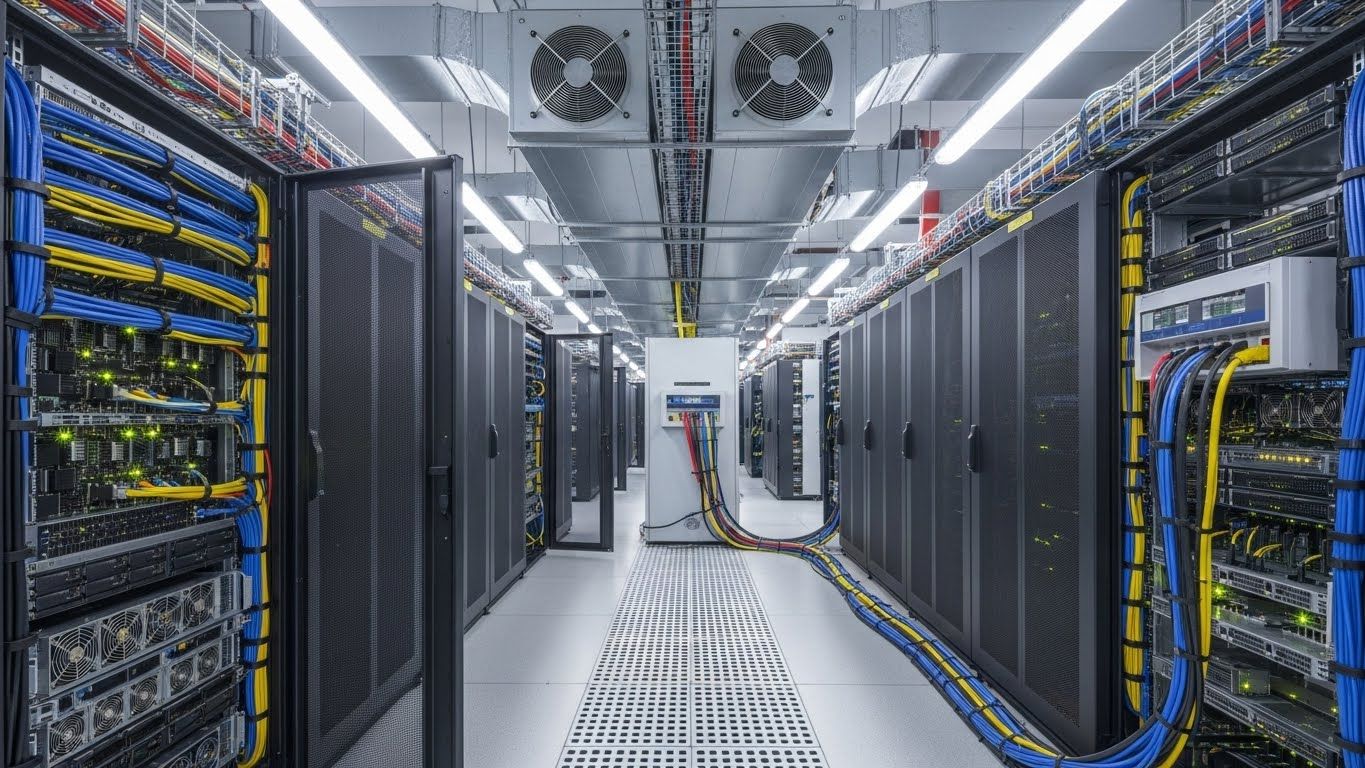
Reports from international financial and energy institutions between 8 and 11 January 2026 underscore that AI growth is increasingly constrained by physical realities rather than algorithmic innovation.
AI does not run on abstractions. It runs on power grids, cooling systems, chip manufacturing and fiber networks. As models grow and inference workloads multiply, energy consumption becomes a central limiting factor. Data centers are now treated as strategic assets in national industrial policy and energy geopolitics. The ability to provide cheap, reliable and clean electricity is emerging as a competitive moat.
Energy outlooks published during the same period show that data center electricity consumption could reach levels equivalent to heavy industrial sectors by 2030. This is driven by model training, inference at scale and edge-to-cloud orchestration. Countries that are attracting large AI investments such as those in parts of the Gulf, India and Southeast Asia are not winning by subsidies alone. They are winning through accelerated permitting, modernized grid planning and renewable baseload capacity.
This creates a new strategic reality. Nations that view energy policy as climate policy only are missing its role as digital competitiveness policy. For business leaders and policymakers, the takeaway is straightforward. The future of AI competitiveness depends as much on energy and infrastructure ministries as it does on innovation and technology ministries. Compute access will determine who participates in the global knowledge and value economy and who becomes dependent on imported intelligence.
ETHICAL GOVERNANCE AND HUMAN LEADERSHIP
Governance, Risk and the Human Dimension

Anadolu Agency on 7 January 2026 and United Nations policy briefing on 11 January highlight that AI related economic gains are increasingly accompanied by governance debates focused on trust, labour transitions, competition policy and the protection of public goods.
As AI becomes embedded in financial systems, healthcare, logistics, education and urban operations, the question shifts from whether AI is capable to whether AI deployment aligns with societal priorities. Without governance, the benefits of AI can concentrate while the risks become systemic. This includes cyber exposure, disinformation markets, bias in automated decision systems and accelerated market consolidation.
Risk profiles published by Anadolu Agency have begun listing AI as a global economic risk factor not because it slows growth but because unmanaged growth creates asymmetries and vulnerabilities. UN policy briefings emphasize that AI adoption must be matched with labour upskilling, competition safeguards, human rights protections and cybersecurity maturity.
The human dimension remains the decisive factor. Economic rewiring without guardrails creates mistrust, inequality and political backlash. Economic rewiring with guardrails can expand opportunity and strengthen public institutions. Leaders who treat AI as a purely technical procurement item will struggle. Leaders who treat AI as a public and economic institution will shape the next decade.
AI can accelerate growth. But growth without design is not progress.
The choices leaders make in the next three years will influence how opportunities are distributed and how resilient societies become.
AI is no longer a technology category. It is a value system, a labour system, and a policy system. And systems require design.
The question now is simple:
Are we building AI powered economies that expand capability for many or are we accelerating value creation for a few?
Don’t miss out on future updates, follow me on social media for the latest news, behind-the-scenes content, and more:
Threads: Click here
Facebook: Click here
Instagram: Click here
LinkedIn: Click here
Enjoyed this newsletter? Share it with friends and help us spread the word!
Until next time, happy reading!
JOIN THE COMMUNITY
The Bridging Worlds Book
Discover Bridging Worlds, a thought-provoking book on technology, leadership, and public service. Explore Lawrence’s insights on how technology is reshaping the landscape and the core principles of effective leadership in the digital age.
Order your copy today and explore the future of leadership and technology.
SHARE YOUR THOUGHTS
We value your feedback!
Your thoughts and opinions help us improve our newsletter. Please take a moment to let us know what you think.
How would you rate this newsletter? |
Reply