- The Digital Bridge with Lawrence Eta
- Posts
- Technology That Strengthens Societies, Not Just Markets
Technology That Strengthens Societies, Not Just Markets
Tech News, Global Digital Transformation, Thought Leadership and Current Trends

Lawrence Eta
February 16, 2026

In partnership with


In the digital age, state capacity is no longer defined solely by military strength, fiscal policy, or industrial output.
It is increasingly defined by how effectively governments design, secure, and govern digital systems that shape everyday life.
From identity verification to internet connectivity, from cybersecurity resilience to data governance, the technologies that once seemed peripheral are now foundational. They influence who participates in the economy, who trusts institutions, and whether democratic systems remain stable under pressure.
This week, we shift from markets to societies, examining how digital architecture is becoming social architecture, and how middle economies can strengthen legitimacy, resilience, and inclusion through intentional technological design.
This week, we examine how digital technologies are becoming core to state resilience, social cohesion, and national legitimacy:
Cybersecurity as Foundational Social Infrustructure
Why cybersecurity is now foundational social infrastructure, not just technical defence, highlighted by Safer Internet Day assessments revealing insecure public systems.Strengthening State Legitimacy through DIP
How Digital Public Infrastructure (DPI) is reshaping inclusion and state legitimacy, reflected in South Africa’s renewed commitment to digital identity and secure electronic public services.Connectivity as a Pillar of Economic Stability
How connectivity disruptions reveal the fragile link between internet access and economic stability, illustrated by ongoing internet blackouts and economic contraction.Advances in Biometric Security
The growing urgency of identity governance and authentication systems, as biometric security and decentralised identity frameworks evolve.Designing AI-Enabled Threats and Systemic Vulnerabilities
Why cyber risk is now a policy frontier, with AI-enabled threats expanding systemic vulnerabilities and requiring coordinated resilience models
World’s First Safe AI-Native Browser

AI should work for you, not the other way around. Yet most AI tools still make you do the work first—explaining context, rewriting prompts, and starting over again and again.
Norton Neo is different. It is the world’s first safe AI-native browser, built to understand what you’re doing as you browse, search, and work—so you don’t lose value to endless prompting. You can prompt Neo when you want, but you don’t have to over-explain—Neo already has the context.
Why Neo is different
Context-aware AI that reduces prompting
Privacy and security built into the browser
Configurable memory — you control what’s remembered
As AI gets more powerful, Neo is built to make it useful, trustworthy, and friction-light.
DIGITAL INCLUSION
Cybersecurity as Social Infrastructure

Cybersecurity is no longer an ancillary technical layer; it is core social infrastructure underpinning public trust, democratic legitimacy, and economic stability.
In today’s digital societies, government services, banking systems, healthcare records, electoral processes, and communication platforms all rely on networked systems. When these systems are insecure, the consequences ripple far beyond technical disruption. They erode citizen confidence and investor certainty simultaneously.
On Safer Internet Day (Feb 11 2026), cybersecurity reviews in Chandigarh revealed that official government portals lacked secure digital protocols (Chandigarh cybersecurity review, Feb 11 2026). At the same time, the Microsoft Global Online Safety Survey (Feb 10 2026) reported that over half of UK respondents experienced significant online risks, including fraud, harassment, and exploitation.
These developments demonstrate that digital insecurity is not abstract. It affects daily interactions between citizens and institutions. When public systems are vulnerable, trust becomes fragile, and when trust declines, democratic participation and economic confidence weaken in tandem.
Middle economies must therefore treat cybersecurity as they treat physical infrastructure. A bridge collapse is visible; a data breach is less visible but equally destabilising. In both cases, the failure undermines faith in governance. Cyber resilience is not optional, it is foundational to modern statehood.
DIGITAL IDs AND PUBLIC TRUST
Digital Public Infrastructure as Trust Architecture

Digital Public Infrastructure (DPI) is emerging as the core architecture of state legitimacy in the 21st century.
DPI encompasses digital identity systems, interoperable payment platforms, and secure data exchange mechanisms. Together, they determine how efficiently a government can serve its citizens and how inclusively it integrates them into the formal economy.
In South Africa’s 2026 State of the Nation Address, President Cyril Ramaphosa reaffirmed commitments to advancing digital identity and expanding secure electronic services (State of the Nation Address, Feb 2026). This signals recognition that governance credibility increasingly depends on digital delivery.
When digital identity is reliable and widely accessible, citizens can interact with institutions securely. When payment systems are interoperable, informal transactions formalise, improving tax efficiency and reducing leakage. When data exchanges are secure, services become streamlined rather than bureaucratically burdensome.
DPI, therefore, is not administrative modernisation alone; it is trust architecture. States that invest in inclusive, rights-respecting DPI enhance social cohesion and institutional legitimacy. Those that neglect it risk widening exclusion and weakening public confidence.
DIGITAL INCLUSION AND SOCIAL STABILITY
Connectivity and Social Stability

Connectivity has become a stabilising force in modern societies, and its disruption carries profound economic and political consequences.
Internet access now underpins commerce, communication, education, remittances, and civic engagement. Disruptions are no longer temporary inconveniences; they directly affect livelihoods and institutional functioning.
The ongoing internet blackouts reported in Iran throughout early February 2026 illustrate how connectivity disruptions can reduce online commercial activity dramatically and isolate citizens from financial and social systems (Iran internet shutdown reporting, Feb 2026).
Reports indicate significant contraction in digital commerce during blackout periods, alongside broader economic losses. Beyond economics, connectivity restrictions limit civic participation and reduce transparency.
For middle economies, resilient connectivity is not merely a telecom objective, it is a stability strategy. Infrastructure must be reliable, distributed, and protected from arbitrary interruption. A digitally connected society is more economically dynamic; a digitally disconnected one becomes vulnerable to stagnation and unrest.
Like coffee. Just smarter. (And funnier.)
Think of this as a mental power-up.
Morning Brew is the free daily newsletter that helps you make sense of how business news impacts your career, without putting you to sleep. Join over 4 million readers who come for the sharp writing, unexpected humor, and yes, the games… and leave feeling a little smarter about the world they live in.
Overall—Morning Brew gives your business brain the jolt it needs to stay curious, confident, and in the know.
Not convinced? It takes just 15 seconds to sign up, and you can always unsubscribe if you decide you prefer long, dull, dry business takes.
AI IN IDENTITY GOVERNANCE
Identity Governance and the Future of Trust

Digital identity is evolving into a central pillar of both security and citizenship.
As fraud, deepfakes, and synthetic identity manipulation increase, governments and enterprises are accelerating adoption of advanced authentication systems. February 2026 security forecasts predict increased biometric safeguards and broader deployment of decentralised identity frameworks (Identity Security Predictions, Feb 2026).
These innovations aim to restore confidence in digital interactions by enhancing verification while potentially giving users greater control over their credentials.
The strategic question is not whether identity systems will expand, but how they will be governed. Systems built around consent, transparency, and accountability strengthen democratic participation. Systems built without safeguards risk eroding civil liberties. The architecture of identity will shape the architecture of true development.
CRITICAL INFRUSTRUCTURE PROTECTION
Cyber Risk as Policy Frontier
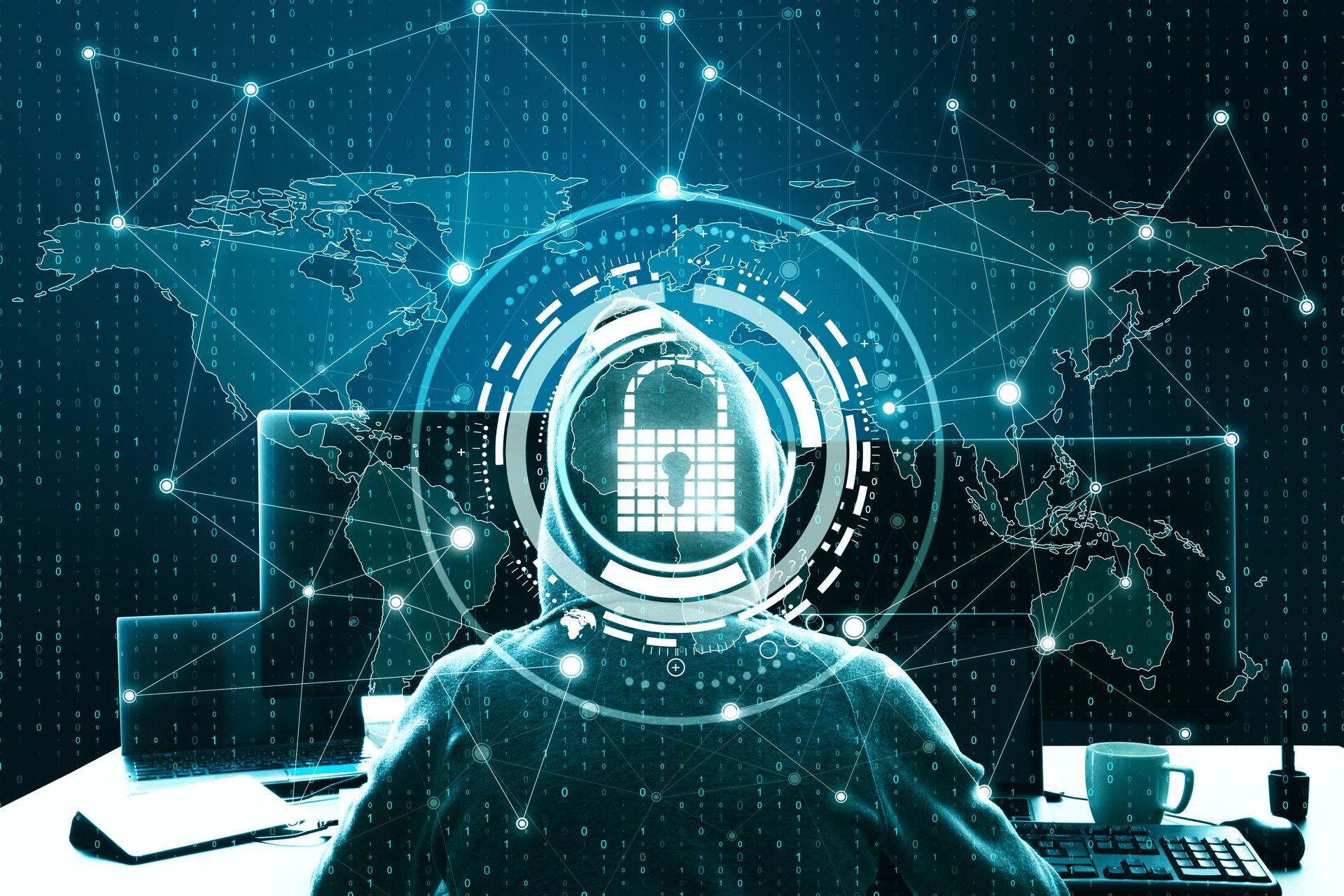
Cybersecurity now occupies a central position at the intersection of geopolitics, economics, and social stability.
The Global Cybersecurity Outlook (Jan 2026) underscores how AI simultaneously enhances defence mechanisms and amplifies threat capabilities. Automation lowers the cost of sophisticated attacks, expanding the surface area of vulnerability across sectors.
From ransomware campaigns targeting public services to automated phishing schemes exploiting AI tools, risk vectors are multiplying. Legacy encryption systems and uneven preparedness exacerbate exposure.
For policymakers, this means cybersecurity strategy must move beyond reactive responses. It requires coordinated public–private partnerships, regulatory clarity, workforce development, and investment in cyber literacy. National resilience depends on anticipating systemic risks, not merely responding to incidents.
Technology that strengthens societies does more than improve efficiency. It embeds trust into infrastructure, resilience into systems, and inclusion into governance.
Middle economies that treat cybersecurity, digital identity, and connectivity as pillars of statecraft will strengthen not only their markets, but their social contracts.
The defining question is no longer whether technology advances progress , but whether it deepens trust.
Don’t miss out on future updates, follow me on social media for the latest news, behind-the-scenes content, and more:
Threads: Click here
Facebook: Click here
Instagram: Click here
LinkedIn: Click here
Enjoyed this newsletter? Share it with friends and help us spread the word!
Until next time, happy reading!
JOIN THE COMMUNITY
The Bridging Worlds Book
Discover Bridging Worlds, a thought-provoking book on technology, leadership, and public service. Explore Lawrence’s insights on how technology is reshaping the landscape and the core principles of effective leadership in the digital age.
Order your copy today and explore the future of leadership and technology.
SHARE YOUR THOUGHTS
We value your feedback!
Your thoughts and opinions help us improve our newsletter. Please take a moment to let us know what you think.
How would you rate this newsletter? |
Reply