- The Digital Bridge with Lawrence Eta
- Posts
- From Data to Impact: Governing Digital Transformation in the Global South | Clean Tech as Infrastructure, Systems, and Strategic Power
From Data to Impact: Governing Digital Transformation in the Global South | Clean Tech as Infrastructure, Systems, and Strategic Power
Why supply chains, energy, and infrastructure are being rebuilt; not optimised

Lawrence Eta
April 13, 2026
In partnership with

Stop Chasing Docs. Automate Them.
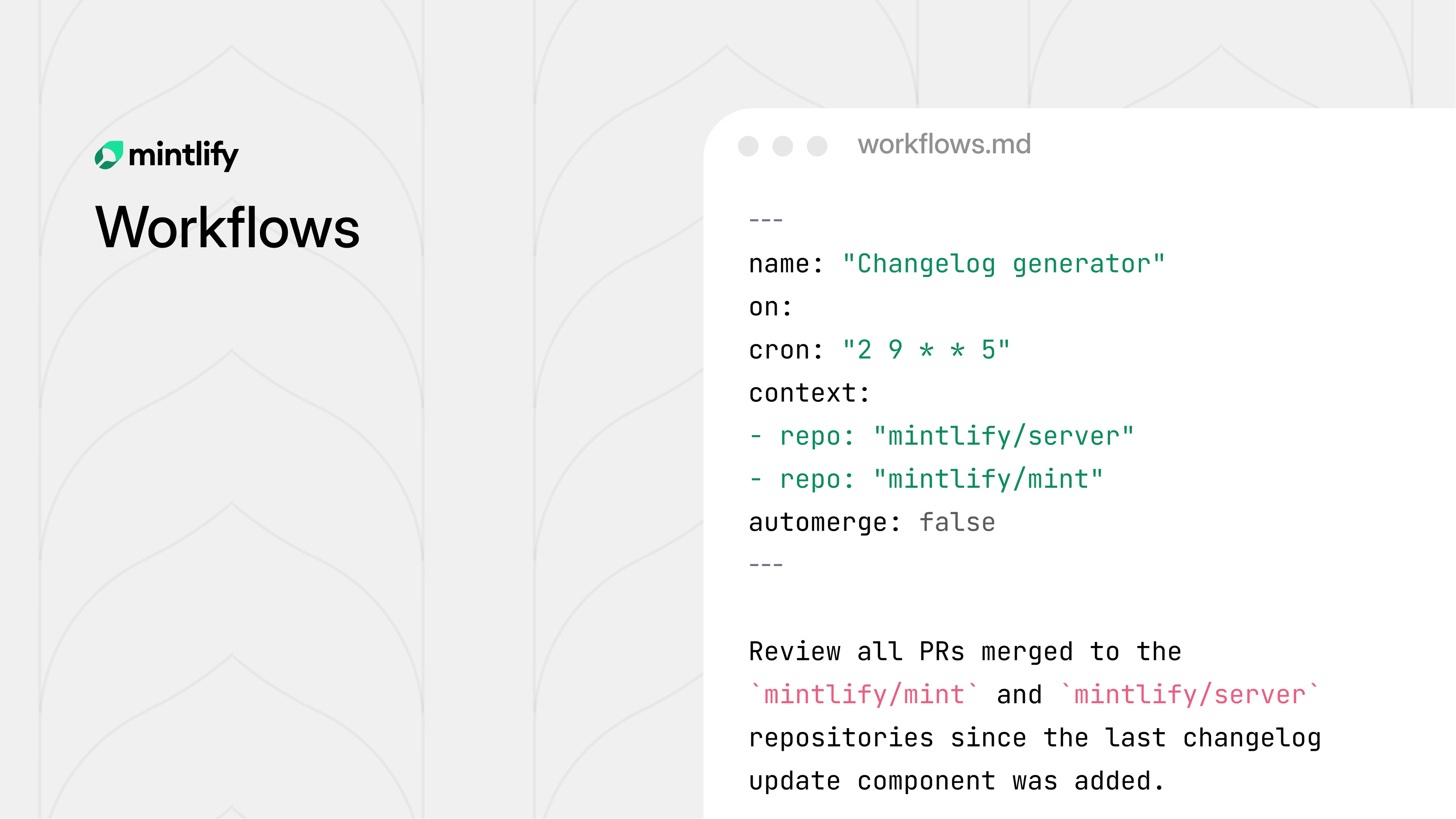
Docs piling up faster than you can write them? Same.
Every team knows the feeling — product ships, docs don't. Changelogs get forgotten. Style violations quietly accumulate. Broken links go unnoticed for months.
Mintlify's new Workflows feature fixes this. Define automation rules, and the agent handles the recurring maintenance work for you — on your schedule, by your rules.
Draft docs when a PR merges. Generate changelogs every Friday. Run a style audit on every push. Flag translation lag before it becomes a problem. Each workflow is version controlled, fully configurable, and fits into your existing review process.
You decide when it runs, what it checks, and whether changes get committed directly or opened as a pull request for review.
The result: documentation that actually keeps up with your product, without someone manually chasing it down.

For years, the global economy was engineered around a single organising principle: efficiency.
Supply chains stretched across continents, fragmenting production into hyper-specialised nodes. Energy was treated as abundant, predictable, and external. Systems were optimised relentlessly for cost, speed, and scale.
That model is now under sustained pressure.
Across the past week alone, multiple signals have reinforced this shift: continued instability in global shipping routes linked to geopolitical tensions, renewed volatility in energy pricing across Europe and parts of Asia, and tightening regulatory frameworks around carbon disclosure and supply chain traceability (Financial Times, Bloomberg, Reuters, 6–12 April 2026).
Individually, these events might appear cyclical. Collectively, they point to something more structural.
This is not disruption.
It is a reconfiguration of the global operating system.
And at the centre of that reconfiguration is a shift that is still widely misunderstood: clean technology is no longer a sustainability layer.
It is becoming system architecture.
This Week’s Edition Covers
This edition explores how clean tech is redefining the foundations of global systems:
• From Data to Impact: Governing Digital Transformation in the Global South.
• Why efficiency-driven supply chains are giving way to resilience-first models (Bloomberg, 8 April 2026)
• How energy instability is forcing companies to rethink control and dependency (Reuters, 7 April 2026)
• Why clean tech is emerging as operational infrastructure, not just environmental strategy (Financial Times, 10 April 2026)
• The growing importance of materials and inputs in the clean tech race (IEA Briefing, 9 April 2026)
• How AI is converging with clean tech to redesign supply chain systems (McKinsey Insights, 11 April 2026)
FROM DATA TO IMPACT
Governing Digital Transformation in the Global South

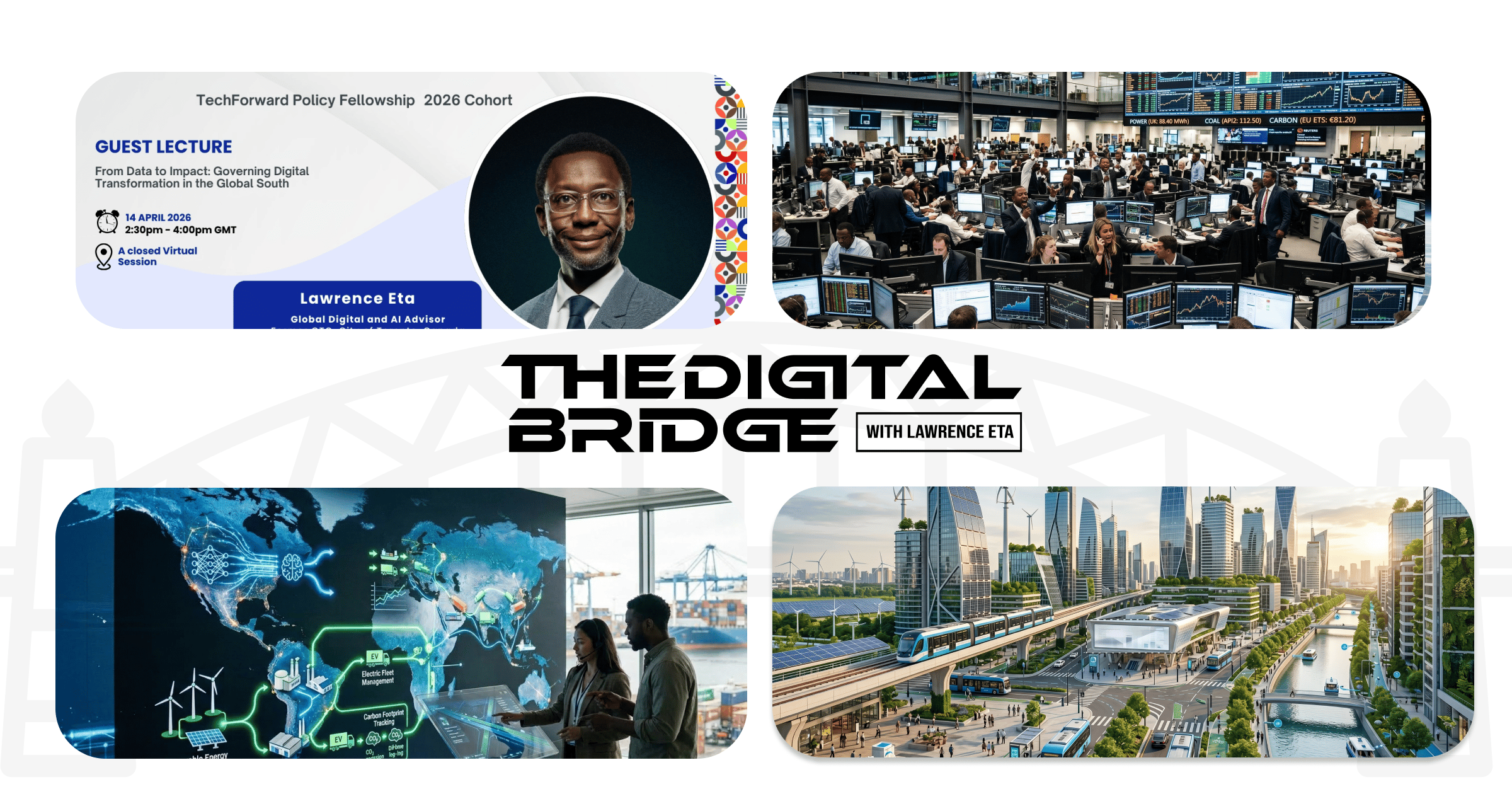
I am honoured to be leading tomorrow’s session with fellows of the TechForward Policy Fellowship, as we move beyond policy design to confront a more difficult question: what does it take to deliver impact?
Following a recent policy clinic with the UNDP Data to Policy Navigator team, this upcoming guest lecture, “From Data to Impact: Governing Digital Transformation in the Global South” focuses on a persistent gap I’ve observed across digital development efforts. In many parts of the Global South, initiatives do not fail for lack of ideas, but at the point of execution where governance, institutional capacity, and coordination become decisive.
Drawing on over two decades of experience across government and large-scale urban innovation, I will share a practitioner’s perspective on what it takes to implement digital transformation at scale.
We will explore how digital public infrastructure can serve as a development lever when governance is aligned, why cybersecurity must be treated as foundational to trust and adoption, and how policy ecosystems ultimately shape innovation outcomes.
As fellows prepare for the session, the challenge is clear: moving from well-designed policies to those that can be governed, executed, and sustained in real-world contexts. The real work lies not just in designing policy, but in translating it into systems that deliver measurable impact.
THE END OF AN ERA
The End of Efficiency as a Strategy

For decades, efficiency functioned as both principle and metric. Systems were designed to eliminate redundancy, compress timelines, and minimise cost at every layer. This model delivered scale, but it also embedded hidden assumptions: geopolitical stability, predictable energy flows, and uninterrupted logistics networks.
Those assumptions are now failing in real time.
Recent reporting highlights how firms are reassessing exposure to single-source manufacturing hubs and long-distance supply chains following continued disruptions across key trade corridors (Bloomberg, 8 April 2026). What once appeared as optimisation is increasingly understood as over-concentration of risk.
The consequence is not simply operational inconvenience; it is systemic fragility.
Efficiency, when pushed to its limit, removes the buffers that absorb shocks. And in a world defined by volatility, the absence of buffers becomes the defining weakness.
This is why resilience is no longer a complementary objective. It is replacing efficiency as the primary design logic.
Clean technology plays a critical role in enabling this transition. By decentralising energy production, enabling localised systems, and reducing dependence on external inputs, it allows organisations to rebuild supply chains with greater control and flexibility.
The shift is subtle but profound: from systems that optimise under ideal conditions, to systems that perform under stress.
Go from AI overwhelmed to AI savvy professional

AI will eliminate 300 million jobs in the next 5 years.
Yours doesn't have to be one of them.
Here's how to future-proof your career:
Join the Superhuman AI newsletter - read by 1M+ professionals
Learn AI skills in 3 mins a day
Become the AI expert on your team
ENERGY AS THE CENTER OF STRATEGY
Energy Is Moving to the Center of Strategy
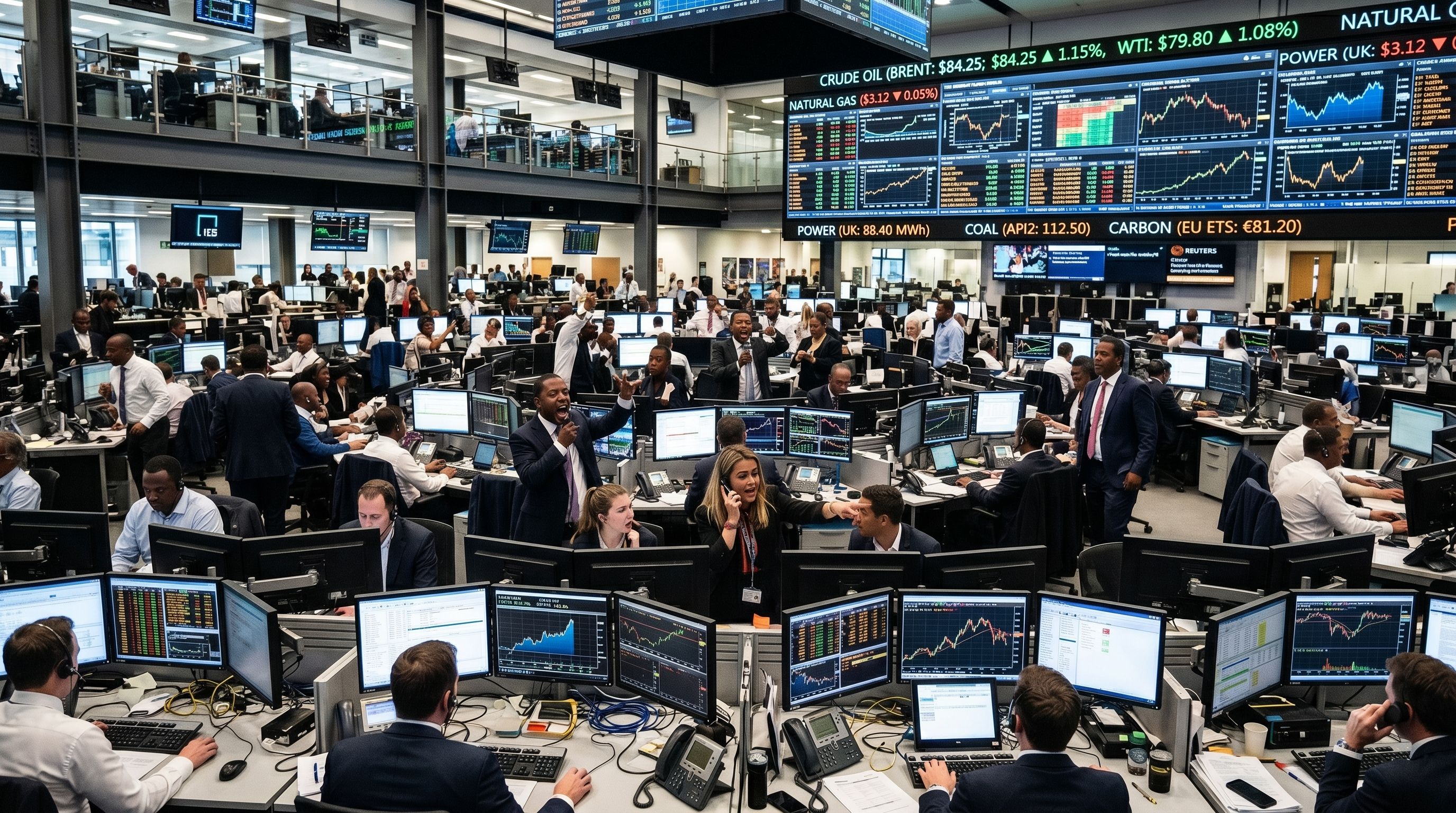
Energy has historically been treated as a background variable; essential, but largely externalised.
That abstraction is no longer sustainable.
Over the past week, energy market volatility driven by geopolitical tensions and supply uncertainties has once again exposed the fragility of relying on centralised, externally controlled energy systems (Reuters, 7 April 2026). Grid instability in several regions has further underscored how dependent modern operations are on infrastructure they do not control.
This is forcing a strategic reconsideration.
Energy is no longer just an input cost. It is a point of exposure.
And increasingly, it is becoming a point of control.
Organisations are responding by shifting towards localised energy strategies: on-site generation, integrated storage, and digitally optimised consumption. These approaches reduce vulnerability to external shocks while improving predictability and operational continuity.
Clean technology is the enabler of this shift. It transforms energy from something that is purchased into something that is designed, managed, and strategically deployed.
The implications extend beyond cost savings.
CLEAN TECH INFRASTRUCTURE
Clean Tech as Infrastructure, Not Initiative

The dominant narrative still positions clean tech as a response to environmental pressure, driven by regulation, investor expectations, or corporate responsibility.
This framing, while partially accurate, understates its real significance.
A growing body of analysis highlights how leading organisations are integrating clean technology directly into operational systems, not as an overlay, but as infrastructure (Financial Times, 10 April 2026). This includes embedding renewable energy into production processes, integrating storage solutions into logistics networks, and deploying smart systems to dynamically manage energy use.
These are not incremental upgrades.
They are structural changes to how systems function.
On-site generation reduces exposure to grid instability. Electrification reduces reliance on volatile fuel markets. Smart grids introduce adaptability, allowing systems to respond dynamically to changing conditions.
Taken together, these capabilities redefine what infrastructure looks like.
It is no longer static.
It is responsive, distributed, and increasingly intelligent.
Organisations adopting this model are not simply aligning with sustainability goals. They are building systems that are inherently more robust, more flexible, and more resilient under pressure.
CONSTRAINT HIDDEN IN MATERIALS
The Hidden Constraint: Materials and Inputs

Beneath the visible layer of clean tech deployment lies a deeper constraint: materials.
Lithium, copper, and rare earth elements are foundational to batteries, electrification, and renewable infrastructure. Their importance is well understood. What is less appreciated is the degree to which their supply is geographically concentrated.
Recent analysis from international energy and resource bodies highlights increasing competition for these materials, alongside concerns around supply bottlenecks and processing capacity (IEA Briefing, 9 April 2026). This introduces a new dimension of geopolitical and economic risk.
The clean tech transition, in this sense, is not eliminating dependency.
It is reconfiguring it.
Where energy dependency once centred on oil and gas, it is now shifting towards minerals and processing capabilities.
This creates both vulnerability and opportunity.
On one hand, supply constraints and geopolitical concentration introduce new forms of exposure. On the other, they open pathways for innovation, through recycling, material substitution, and regional value chain development.
The strategic question is no longer just how quickly clean tech can be deployed.
It is who controls the inputs that make that deployment possible.
CONVERGENCE OF INDUSTRIES
The Convergence: AI, Clean Tech, and Supply Chains
A more subtle, but equally important, shift is taking place at the intersection of digital and physical systems.
Artificial intelligence, clean technology, and supply chains are beginning to converge into a single operational layer.
Recent industry insights highlight how AI is being used to optimise energy usage, predict supply chain disruptions, and dynamically adjust operations in response to changing conditions (McKinsey Insights, 11 April 2026). When combined with clean tech infrastructure, this creates systems that are not just efficient, but adaptive.
This marks a transition from static optimisation to dynamic coordination.
Supply chains are no longer fixed networks. They are becoming responsive systems—capable of balancing cost, carbon, and risk in real time.
The implications are significant.
Decision-making shifts from periodic to continuous. Systems move from reactive to predictive. And operational performance becomes a function of how well technology layers are integrated.
This is not an incremental improvement.
It is a redesign of how systems operate.
Building the Next System
We are not witnessing a temporary disruption.
We are entering a new phase of system design.
The structures that defined globalisation—built on efficiency, scale, and predictability—are being replaced by systems that prioritise resilience, adaptability, and control.
Clean technology is central to this transition.
Not as a peripheral initiative, but as a foundational layer in how future systems are constructed.
The organisations and economies that recognise this early will not simply adapt to change.
They will shape the architecture of what comes next.
Don’t miss out on future updates, follow me on social media for the latest news, behind-the-scenes content, and more:
Threads: Click here
Facebook: Click here
Instagram: Click here
LinkedIn: Click here
Enjoyed this newsletter? Share it with friends and help us spread the word!
Until next time, happy reading!
JOIN THE COMMUNITY
The Bridging Worlds Book
Discover Bridging Worlds, a thought-provoking book on technology, leadership, and public service. Explore Lawrence’s insights on how technology is reshaping the landscape and the core principles of effective leadership in the digital age.
Order your copy today and explore the future of leadership and technology.
SHARE YOUR THOUGHTS
We value your feedback!
Your thoughts and opinions help us improve our newsletter. Please take a moment to let us know what you think.
How would you rate this newsletter? |
Reply