- The Digital Bridge with Lawrence Eta
- Posts
- Empathy Premium: Why Human Skills Just Got Repriced
Empathy Premium: Why Human Skills Just Got Repriced
The scarcest leadership capability in the next decade is the one no model can replicate

Lawrence Eta
May 18, 2026

In partnership with

Fast browsing. Faster thinking.
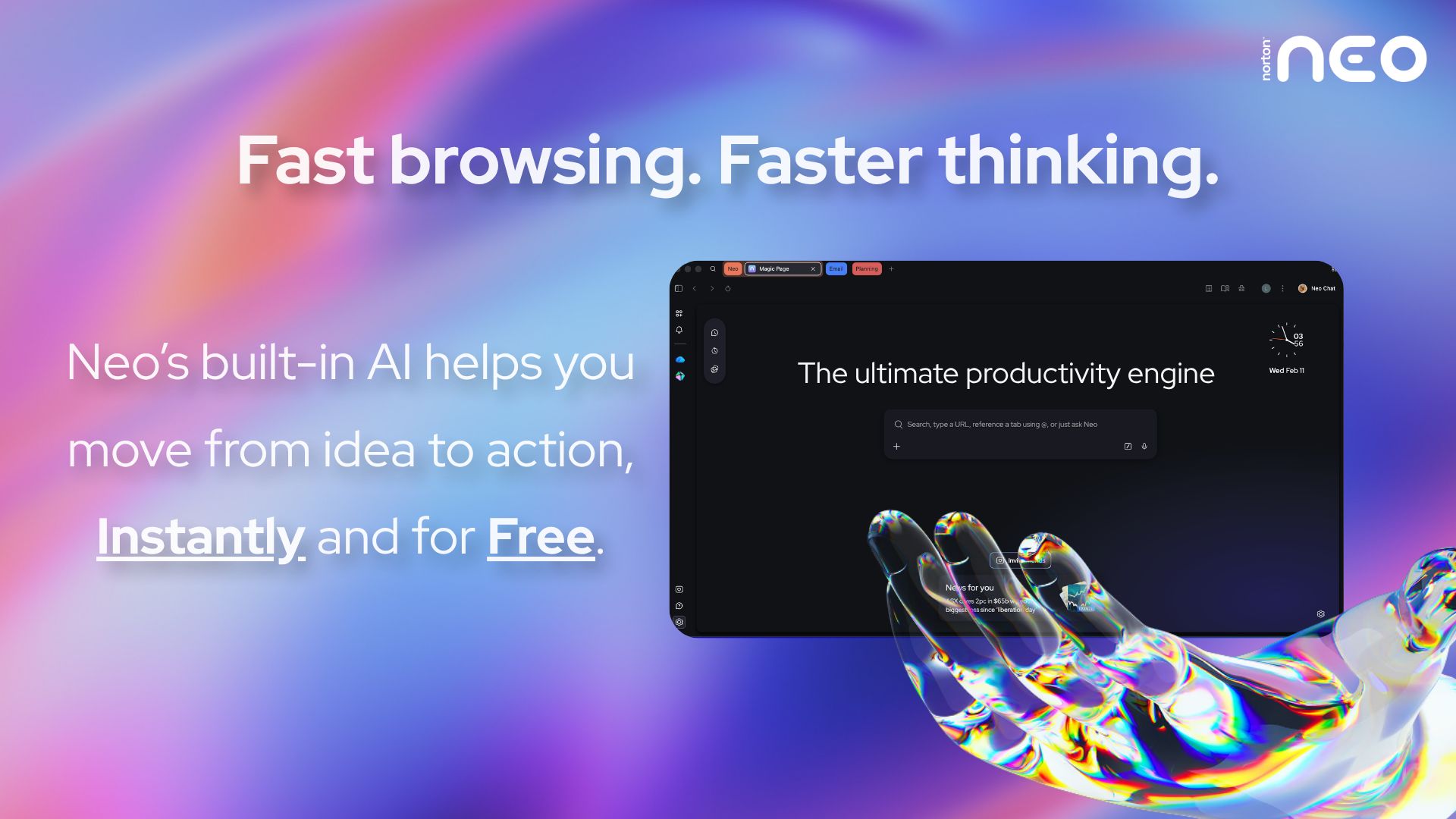
Your browser gets you to a page. Norton Neo gets you to the answer. The first safe AI-native browser built by Norton moves with you from idea to action without slowing you down. Magic Box understands your intent before you finish typing. AI that works inside your flow, not beside it. No prompting. No copy-pasting. No switching apps.
Built-in AI, instantly and for free. Privacy handled by Norton. Built-in VPN and ad blocking protect you by default. No configuration. No extra apps. Nothing to think about.
Fast. Safe. Intelligent. That's Neo.

A finding moved quietly through the workplace research community last week. In a Harvard Business Review study published this month, more than half of 1,545 US knowledge workers surveyed said they felt lonely at work. The researchers were specifically investigating a new pattern: employees turning to AI tools for personal and emotional support.
The headline conclusion was that AI cannot replace the benefits of human connection and may, over time, erode collaboration, trust, and the social skills that hold teams together (HBR, 2026). Read that finding alongside what is now well established about AI adoption. Productivity gains are real. Time saved per task is measurable. Output velocity has accelerated across nearly every function that has deployed AI at scale. And yet half of the workforce feels lonelier than ever.
This is the leadership signal of the decade. The technical capability is no longer the constraint. The human layer around those deployments is. Empathy is no longer a soft skill. It is the empathy premium, and the market is starting to price it.
This Week’s Edition
This edition explores why human skills just got more valuable, not less, in an AI-driven economy:
How a 1,545-worker HBR study reframes the cost of AI adoption from productivity to belonging
Why Gallup's 23,717-employee survey shows manager support for AI is the single biggest determinant of whether the rollout works
What Deloitte's 2026 Global Human Capital Trends identifies as the enduring capabilities AI cannot replicate
Why BCG expects 50 to 55 percent of US jobs to be reshaped by AI in the next two to three years, and what that means for leadership development
How LinkedIn's 2026 hiring data shows AI fluency becoming table stakes while emotional intelligence becomes the differentiator
THE LONELINESS SIGNAL
What the HBR May Study Just Confirmed

The HBR piece published this month is worth reading in full. Beyond the headline finding that more than half of knowledge workers feel lonely at work, the researchers documented a specific behavioural shift. Employees are now using AI tools as a substitute for emotional and relational support that they used to seek from colleagues and managers (HBR, 2026).
The pattern is corrosive. Each individual instance of relying on AI for support feels efficient. The cumulative effect is that human relationships at work are being quietly hollowed out.
A second HBR piece, published in April, made the connection explicit. Empathetic leadership is not a soft preference. It is the variable that determines whether AI adoption succeeds. Employees with caring managers are significantly more likely to innovate and embrace new technologies (HBR, 2026).
The implication is uncomfortable for many leadership teams. The traits that get a leader promoted in most organizations today, technical fluency, process management, measurable output, are not the traits that determine whether their teams will adapt successfully to AI.
The repricing has begun.
THE MANAGER MULTIPLIER
What Gallup’s 23,717 Employee Survey Reveals

Gallup's most recent State of the Workplace research, based on a February 2026 survey of 23,717 US employees, produced one finding that should reshape every leadership development conversation this quarter.
Employees who strongly agree that their manager actively supports their team's use of AI are 8.7 times more likely to agree that AI has transformed how work gets done at their organization. They are 7.4 times more likely to agree that AI gives them opportunities to do what they do best every day (Gallup, 2026).
Yet less than a third of US employees in AI-adopting organizations strongly agree their manager actively supports the rollout.
That gap is the AI productivity gap. It is not a technology problem. It is a management capability problem.
Gallup's data also surfaces a parallel concern. Manager engagement itself has dropped sharply, from 31 percent in 2022 to 22 percent in 2025. The leaders most responsible for AI adoption success are the leaders who are most disengaged. McKinsey research aligns with this picture, identifying judgment, empathy, and trust-building as the fundamentally human capabilities that enable effective leadership in an AI-rich environment (McKinsey, 2026).
This is the leadership signal no dashboard captures.
10x the context. Half the time.

Speak your prompts into ChatGPT or Claude and get detailed, paste-ready input that actually gives you useful output. Wispr Flow captures what you'd cut when typing. Free on Mac, Windows, and iPhone.
THE ENDURING CAPABILITIES
What Deloitte's 2026 Human Capital Trends Identifies

Deloitte's 2026 Global Human Capital Trends report names six enduring human capabilities as the determinants of whether teams thrive in high-automation environments: curiosity, resilience, divergent thinking, informed agility, connected teaming, and emotional and social intelligence (Deloitte, 2026).
The pattern across these six is consistent. None of them are technical. All of them are relational or adaptive. And all of them are precisely what AI cannot supply.
Deloitte's survey also captured the strategic context. Seven in ten business leaders said their primary competitive strategy over the next three years is to be fast and nimble. The two most important drivers of success they named were accelerating how people and resources are orchestrated, and increasing the workforce's ability to adapt to change at speed (Deloitte, 2026).
Neither of those drivers can be automated. They are both downstream of leadership capacity.
The implication is structural. The competitive frontier is shifting from how well organizations deploy AI to how well they develop the human capabilities that determine whether AI deployment actually produces value.
THE HIRING SIGNAL
What the Market Is Quietly Doing

The hiring market is moving faster than most organizations realize. According to LinkedIn's 2026 workforce data, AI literacy is now a baseline requirement across most roles. The differentiation has moved elsewhere.
LinkedIn's analysis is direct. Employers are placing even greater value on human capabilities like empathy and personal connection. The real advantage comes from a workforce that blends AI fluency with these uniquely human strengths (LinkedIn, 2026).
The fastest-growing roles LinkedIn identifies make the point concrete. New home sales specialists. Healthcare reimbursement specialists. Advertising sales specialists. Fundraising officers. These jobs rely on emotional intelligence, credibility, taste, and care. They are growing because those qualities remain uniquely human and cannot be absorbed by software (LinkedIn, 2026).
BCG's 2026 workforce research adds the macro frame. Over the next two to three years, 50 to 55 percent of US jobs will be reshaped by AI. Most workers will retain a similar role but face radically new expectations for how they work. The companies realising the most value from AI are also the ones investing most aggressively in upskilling (BCG, 2026).
The leadership question is whether the upskilling is targeting the right capabilities. The market is signalling clearly that it is not just AI fluency that matters. It is what people do with that fluency, and how they treat each other while doing it.
A complementary signal: industry analysts now describe empathy as a measurable leadership KPI directly linked to retention, engagement, productivity, and organizational performance, no longer a soft attribute but a tracked competitive variable (MENA Speakers, 2026).
The Leadership Reframe
The conversation around AI and the workforce has been dominated by a question of substitution. What will AI replace? Who is at risk?
The more useful question is one of amplification. What does AI make scarce?
The answer is now visible in the research. AI makes the human capabilities it cannot replicate scarcer and therefore more valuable. The ability to read context that is not recorded. The discipline to make decisions when the data is ambiguous. The patience to build the trust that no algorithm can supply. The judgment to know when a technically correct answer is the wrong answer for this organization in this moment.
These are not skills to be celebrated in a values statement. They are competitive capabilities to be developed deliberately and measured rigorously.
The organizations that take this seriously will outperform the ones still optimizing for capabilities AI is now absorbing.
Empathy is not a counter-force to AI. It is the multiplier that determines whether AI investment produces returns.
And in the next decade, the leaders who develop it will be the ones who matter most.
Threads: Click here
Facebook: Click here
Instagram: Click here
LinkedIn: Click here
Enjoyed this newsletter? Share it with friends and help us spread the word!
Until next time, happy reading!
JOIN THE COMMUNITY
The Bridging Worlds Book
Discover Bridging Worlds, a thought-provoking book on technology, leadership, and public service. Explore Lawrence’s insights on how technology is reshaping the landscape and the core principles of effective leadership in the digital age.
Order your copy today and explore the future of leadership and technology.
SHARE YOUR THOUGHTS
We value your feedback!
Your thoughts and opinions help us improve our newsletter. Please take a moment to let us know what you think.
How would you rate this newsletter? |
Reply