- The Digital Bridge with Lawrence Eta
- Posts
- 2026 AI Predictions and Governance Trends
2026 AI Predictions and Governance Trends
Tech News, Global Digital Transformation, Thought Leadership and Current Trends

Lawrence Eta
December 22, 2025

In partnership with


.
As 2025 comes to a close, artificial intelligence stands at a very different place than it did twelve months ago. What was once framed as an emerging technology is now a structural force. AI is shaping how governments allocate resources, how companies compete, how institutions make decisions, and how citizens experience power, access, and accountability.
This second last newsletter of the year is not about forecasting in isolation. It is about pattern recognition. Across regions, sectors, and policy environments, similar themes have emerged again and again throughout 2025. AI has moved from experimentation into infrastructure. Governance has shifted from theory into execution. Trust has become as valuable as performance. And leadership is being quietly redefined by who understands these shifts early enough to act.
Looking ahead to 2026, the most important developments will not come from a single breakthrough model or platform. They will come from how societies choose to govern intelligence that increasingly mediates human outcomes at scale.
This week’s edition covers:
The global shift from AI pilots to AI as national and enterprise infrastructure
Why AI governance is moving decisively from principles into operational systems
How emerging economies are influencing global governance through pragmatic adoption models
Why trust and accountability are becoming strategic assets rather than ethical add ons
A closing reflection on why governance literacy will define leadership effectiveness in 2026
Turn AI Into Extra Income

You don’t need to be a coder to make AI work for you. Subscribe to Mindstream and get 200+ proven ideas showing how real people are using ChatGPT, Midjourney, and other tools to earn on the side.
From small wins to full-on ventures, this guide helps you turn AI skills into real results, without the overwhelm.
EXPERIMENTATION TO INFRASTRUCTURE
From Experimentation to Infrastructure Level AI

Image Source: Send Bird
One of the clearest signals across 2025 has been the transition of AI from experimental capability to embedded infrastructure. Early in the year, many organizations were still testing isolated use cases. By the final quarter, AI systems were deeply integrated into workflows that affect millions of people daily.
This shift fundamentally changes the governance conversation. Infrastructure cannot afford ambiguity. It must be stable, resilient, and accountable. Throughout the year, reports from public sector bodies, enterprise research groups, and multilateral organizations consistently highlighted the same concern. When AI becomes infrastructure, its failures are no longer localized. They cascade.
In regions such as Canada, the United Kingdom, and across parts of the Middle East, governance discussions increasingly focused on embedding accountability into system design rather than relying on post deployment fixes. Procurement standards began to include transparency requirements. Risk assessments expanded beyond data security to include social impact. Oversight moved closer to executive and board level.
What this signals for 2026 is clear. Organizations that treat AI infrastructure like traditional IT will struggle. The systems are more adaptive, more opaque, and more influential. Governing them requires new muscles, new language, and new forms of institutional maturity.
ASPIRATION TO EXECUTION
Governance Moves from Aspiration to Execution

Image Source: Zeena
Another defining theme of 2025 has been the evolution of AI governance from aspirational frameworks into operational reality. Early ethics statements served an important role. They set direction and intent. But as adoption accelerated, intent alone proved insufficient.
Across the year, international organizations and industry groups increasingly emphasized practical governance mechanisms. Model documentation. Decision traceability. Clear lines of accountability when systems influence outcomes. Human oversight that is meaningful rather than symbolic.
This shift reflects a growing understanding that governance is not about slowing innovation. It is about enabling it responsibly. Organizations that invested early in governance structures found it easier to scale AI with confidence. Those that delayed governance often faced internal resistance, regulatory uncertainty, or public scrutiny.
Looking ahead to 2026, governance will no longer be judged by the elegance of policy language. It will be judged by whether organizations can demonstrate control, accountability, and learning when AI systems behave in unexpected ways.
The Future of AI in Marketing. Your Shortcut to Smarter, Faster Marketing.

This guide distills 10 AI strategies from industry leaders that are transforming marketing.
Learn how HubSpot's engineering team achieved 15-20% productivity gains with AI
Learn how AI-driven emails achieved 94% higher conversion rates
Discover 7 ways to enhance your marketing strategy with AI.
EMERGING ECONOMIES AND GOVERNANCE
Emerging Economies Shaping the Governance Narrative
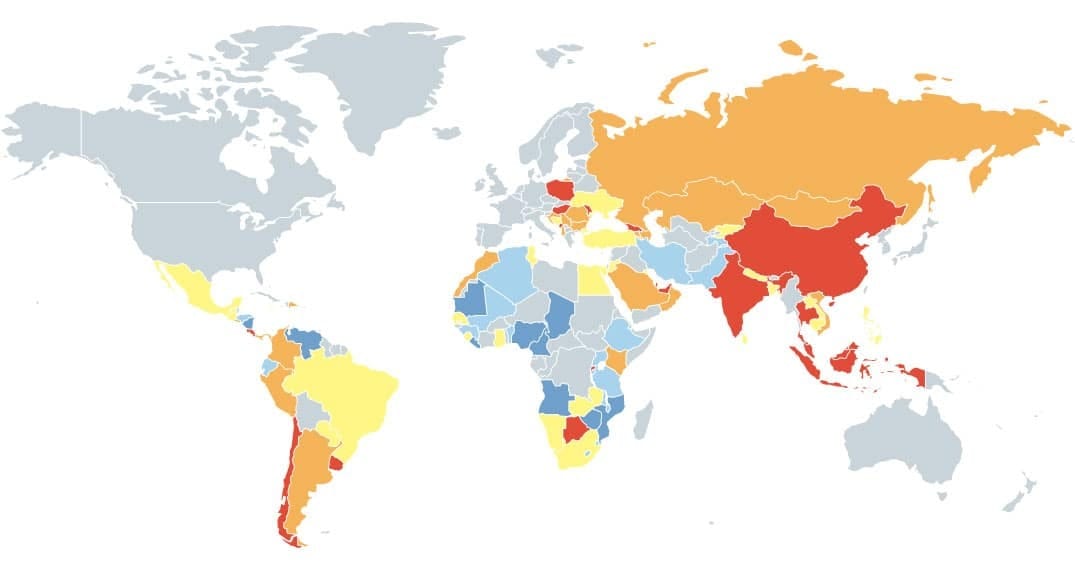
Image Source: Global Finance
One of the most important but often overlooked developments of 2025 has been the role of emerging economies in shaping how AI governance is approached. In regions such as Africa and parts of the Middle East, the conversation has been less theoretical and more grounded in lived realities.
Rather than starting with restrictive regulation, many countries focused on capacity building, institutional readiness, and policy learning. Collaborations between nations such as South Africa and the United Kingdom highlighted a model based on shared expertise rather than imposed standards. The emphasis was on training policymakers, building governance capability, and aligning AI deployment with development priorities.
In Nigeria and across the broader MENA region, AI governance was increasingly framed as a tool for inclusion, service delivery, and economic participation. This approach recognizes that governance must enable progress, not just prevent harm.
As 2026 approaches, these models offer an important lesson. Effective AI governance does not look identical everywhere. It must be contextual, adaptive, and connected to national priorities while remaining interoperable with global norms.
THE CURRENCY OF ADOPTION
Trust as The Defining Currency of AI Adoption

Image Source: EuroFinance
Throughout 2025, one theme surfaced repeatedly across public discourse. Trust. As AI systems expanded into sensitive domains such as finance, healthcare, justice, and information access, public concern grew alongside adoption.
This year made it clear that performance alone is not enough. Systems can be fast and accurate, yet still fail if people do not trust how decisions are made or who is accountable when things go wrong.
In response, leading institutions began to treat trust as a strategic objective rather than a communications challenge. Transparent governance practices, clear explanations of AI use, and visible human accountability became competitive differentiators.
As we move into 2026, trust will increasingly determine whether AI systems are embraced or resisted. Organizations that can demonstrate responsible governance will move faster, scale more confidently, and face fewer social and regulatory barriers.
ETHICAL GOVERNANCE AND LITERACY
Governance Literacy Becomes a Leadership Requirement

Image Source: Naaia
A quieter but critical pattern across 2025 has been the gap between technical capability and leadership understanding. Many organizations now have access to advanced AI systems. Far fewer leaders feel equipped to interrogate how those systems operate, what risks they introduce, and how governance should be structured.
This gap creates exposure. Without governance literacy, leaders struggle to ask the right questions. They rely too heavily on technical teams or vendors. They react rather than anticipate.
In 2026, governance literacy will become as important as financial literacy or digital literacy once was. Leaders will not need to build models themselves. But they will need to understand accountability structures, risk signals, and governance trade offs well enough to make informed decisions.
Those who develop this literacy will shape AI intentionally. Those who do not will inherit outcomes they did not design.
As AI increasingly shapes decisions at scale, who do we expect to be responsible when those decisions shape lives.
As we look toward 2026, the conversation around artificial intelligence is maturing. The focus is shifting away from what AI can do and toward how it should be governed.
The next phase of AI will not be defined by speed alone. It will be defined by judgment. By the ability to balance innovation with responsibility. By the willingness to design systems that are not only powerful, but legitimate in the eyes of those they affect.
If intelligence is becoming embedded in our institutions, the real test is whether accountability is keeping pace.
The real question for leadership is, as artificial intelligence becomes embedded in our institutions, are we designing systems that merely scale decisions or leaders who are prepared to be accountable for them?
Don’t miss out on future updates, follow me on social media for the latest news, behind-the-scenes content, and more:
Threads: Click here
Facebook: Click here
Instagram: Click here
LinkedIn: Click here
Enjoyed this newsletter? Share it with friends and help us spread the word!
Until next time, happy reading!
JOIN THE COMMUNITY
The Bridging Worlds Book
Discover Bridging Worlds, a thought-provoking book on technology, leadership, and public service. Explore Lawrence’s insights on how technology is reshaping the landscape and the core principles of effective leadership in the digital age.
Order your copy today and explore the future of leadership and technology.
SHARE YOUR THOUGHTS
We value your feedback!
Your thoughts and opinions help us improve our newsletter. Please take a moment to let us know what you think.
How would you rate this newsletter? |
Reply